




Smoking
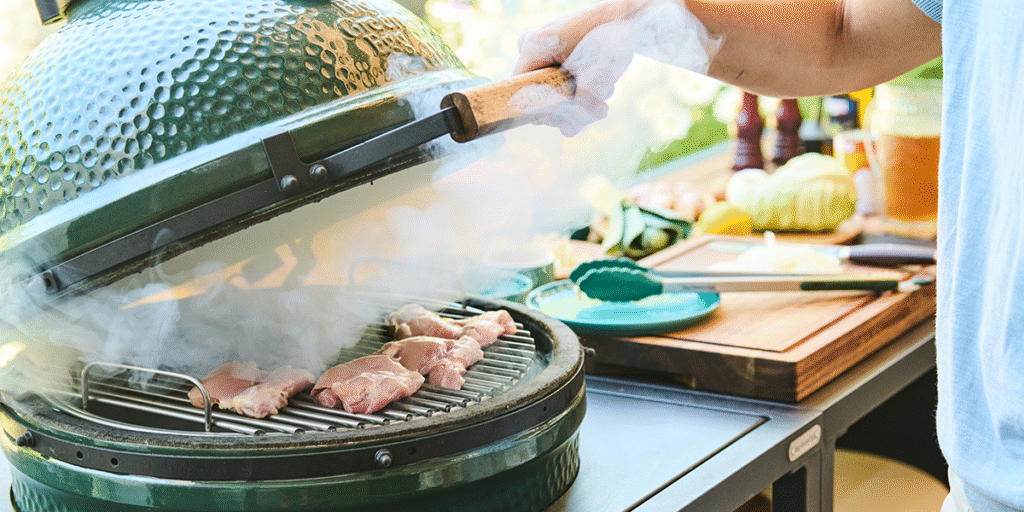
Fancy some homemade hot-smoked salmon, a delicious smoked duck breast or pulled pork? You can make all of that yourself in your Big Green Egg, of course! Thanks to the lid, you can easily transform this kamado into a smoker to give your ingredients even more flavour.
Smoking on the Big Green Egg
Smoking originally arose out of the need to extend the shelf life of ingredients. In addition, it meant the food was already cooked and took on a delicious aroma. Originally, smoking the ingredients wasn’t intended as a flavouring, but the smoke did add a delicious flavour. That’s why smoking remains a popular cooking technique today, using wood as a natural flavouring. Read more about hot smoking on the Big Green Egg here.
Which smoking wood should you choose?
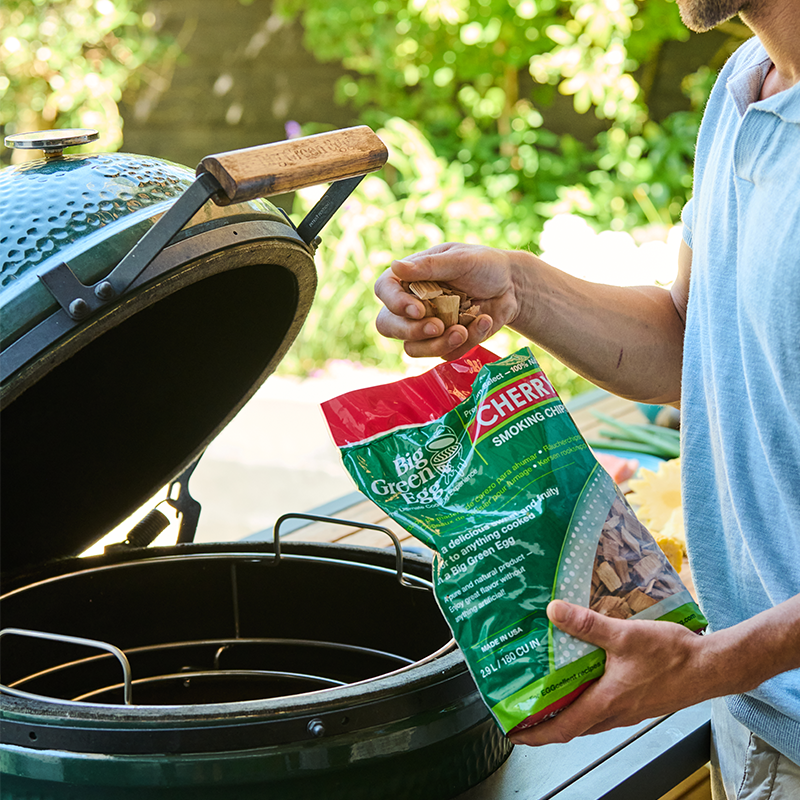
To use your Big Green Egg as a smoker for hot smoking, you’ll need smoking wood, in the form of Wood Chips, Wood Chunks or a Wooden Grilling Plank. But how do you decide whether to use Wood Chips, Wood Chunks or a Wooden Grilling Plank?
Smoking techniques for every dish
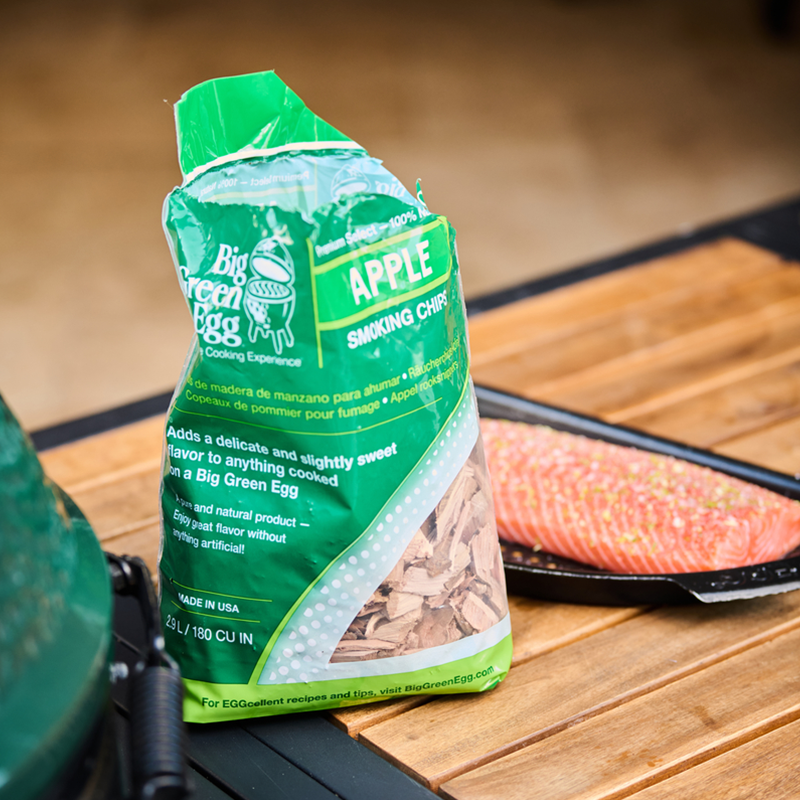
It’s actually very simple. Use the smaller Wood Chips for shorter smoking sessions of up to about half an hour. This is ideal for smoking and cooking fish, poultry and cuts of meat that aren’t too thick, but also for smoking ingredients, such as couscous. Is a longer smoking session for a nice, big piece of meat on the menu? Then opt for Wood Chunks. This is simply because they keep smoking for a long time. You can soak the Wood Chips, but you don’t have to. Wood Chips are sometimes soaked to prevent them from catching fire. However, as you’ll be closing the kamado lid straight away, any flames will quickly die down due to the limited oxygen supply.

How do you smoke on a kamado?
We’ll explain that step by step. For smoking sessions using Wood Chips and Chunks, the set-up in your Big Green Egg is the same. Once the kamado has reached the right temperature, scatter a handful of Wood Chips onto the glowing charcoal or place one or two Wood Chunks on top. Next, place the heat shield on top, with a drip tray underneath to catch any dripping fat, ensuring your heat shield stays clean. Then place the Stainless Steel Grid in the kamado with the ingredient you wish to smoke on top. For example, are you smoking a nice piece of pork belly, a rump or a duck breast? If so, place it with the fat layer facing upwards, so that the delicious flavour of the fat seeps into the meat as it melts.
The perfect smoking temperature
When smoking with Wood Chips and Chunks, you should generally maintain a temperature between 70 and 120°C. Thinner ingredients that require a lower core temperature, or ingredients like fruit that do not need to be cooked, should be smoked at between 70 and 90°C. This gives the smoke enough time to impart its flavour without the ingredient cooking too quickly. Larger cuts, such as pork neck and/or shoulder for pulled pork and, for example, brisket, can be smoked at higher temperatures of between 90 and 120°C, as they take longer to cook until done. When heating up the Big Green Egg, bear in mind that the temperature inside the kamado will drop by around 40 to 50°C when you insert the heat sh You should therefore heat the EGG to a higher temperature than the one at which you wish to smoke.
Smoking on a Wooden Grilling Plank
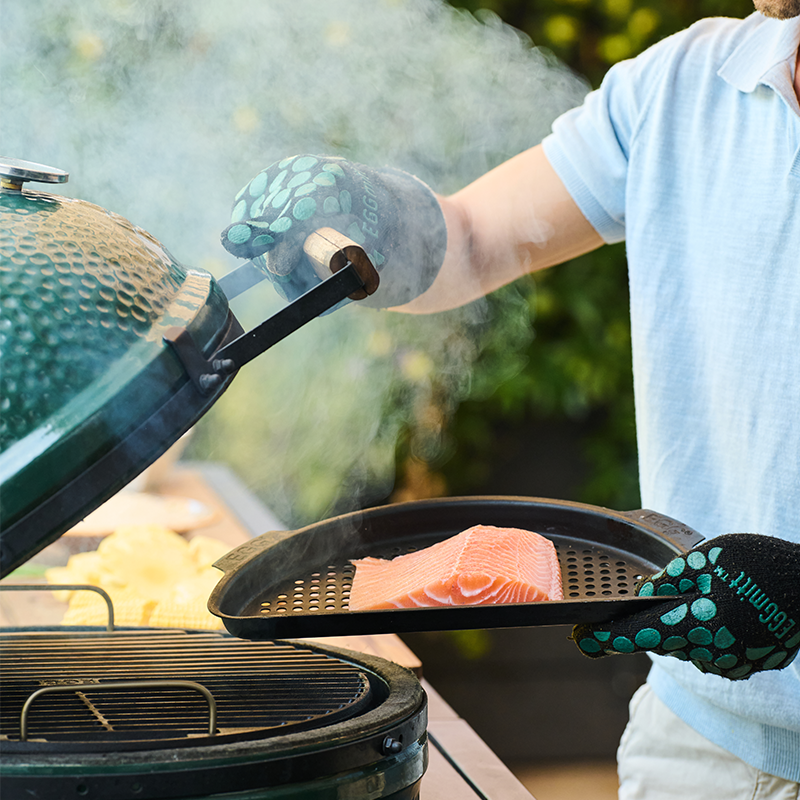
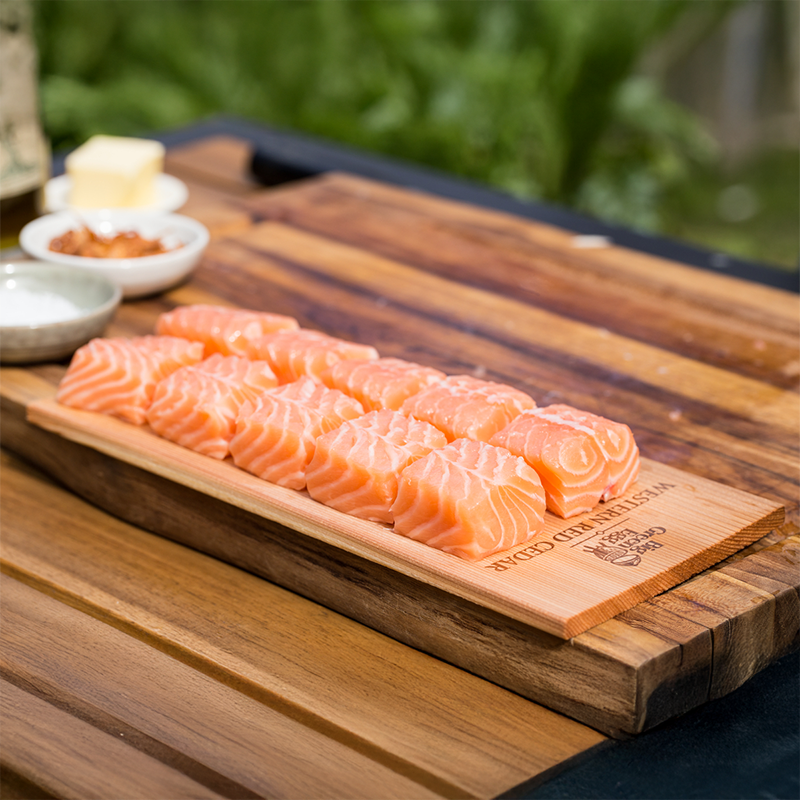
How do you use a Wooden Grilling Plank? When using a Wooden Grilling Plank, you shouldn’t use a heat shield; simply place the soaked plank, with the food on top, directly onto the Stainless Steel Grid of your Big Green Egg. This will cause the underside of the plank to smoulder. When smoking this way, maintain a dome temperature of between 175 and 225°C. This method is ideal for delicate ingredients such as fish fillets, prawns, scallops, vegetables, olives and small dishes.

How long should you smoke for?
The duration of the smoking process depends on which ingredient you wish to smoke. For example, a salmon fillet only needs to be smoked for between 15 and 45 minutes, but a large piece of pork belly, a delicious leg of lamb or a ham on the bone can be smoked for hours. Bear in mind that too much smoke can result in a bitter taste, while a slightly milder smoky flavour will still produce a delicious result. Start off gently, especially with smaller, delicate ingredients, and keep an eye on the desired core temperature of the ingredient.
Tips for a subtle smoky flavour
As well as the different types of smoking wood, there are also different ‘flavours’, which depend on the type of wood. Wood from fruit trees, such as apple wood and cherry wood, is fairly mild, whilst mesquite and hickory give off an intense smoky aroma. As a general rule, ingredients with mild flavours are best paired with a mild type of wood. Conversely, for ingredients that are already packed with flavour – perhaps from a rub or marinade – you can confidently choose a type of wood that imparts a more intense flavour. Pecan generally pairs well with all ingredients. With these rough guidelines in mind, you can play around with the flavours of the different types of smoking wood to your heart’s content. Just have fun experimenting – that’s how you’ll discover your favourite combinations! Would you like to know more about flavour combinations? Then take a look at the frequently asked questions.

-
Which dish is best for your first time smoking on a Big Green Egg?

If you’re smoking food on the Big Green Egg for the first time, salmon, chicken, duck breast, pork belly or pork neck are good choices. These ingredients produce quick results and clearly demonstrate how smoking affects flavour and texture.
-
Which type of smoking wood suits which ingredient?
- Apple imparts a mild, sweet flavour to fish, shellfish and poultry, such as chicken and turkey, but also pairs very well with pork and veal.
- Cherry is a crowd-pleaser with a mild, fruity flavour. It pairs very well with fish, lamb, all types of game, duck, beef and pork. However, peppers and red fruits also pair well with cherry wood.
- Pecan imparts a nutty flavour to fish and poultry. It pairs very well with mackerel, as well as with beef, dark-meat poultry, duck, game and milk chocolate. So, it’s a real all-rounder.
- Hickory has an intensely smoky and spicy flavour. It goes well with beef, spiced pork and all types of game, but is also excellent for smoking nuts. Use hickory particularly for spicy smoked dishes, such as American BBQ classics like pulled pork.
- Mesquite gives steaks and pork chops a delicious, spicy and tangy flavour. It pairs well with spiced beef, pork and game. It’s often used for pulled pork and brisket.
- Oak has a medium-intensity aroma and is suitable for all types of meat, particularly large cuts. Beef, in particular, pairs well with oak, and this flavour – just like hickory – is therefore perfect for brisket.
-
Which ingredients absorb the most flavour from the smoke?
Ingredients with a higher fat content often absorb smoky flavours more strongly. Examples include salmon, duck breast, pork belly, pork shoulder and brisket. Fat particles trap the flavour compounds from the smoke effectively, giving these dishes a rich flavour.
-
Can you also smoke fruit, vegetables and other plant-based ingredients?
Yes, smoking is not just for meat and fish. Vegetables such as sweetcorn, peppers, cauliflower and pumpkin gain extra depth of flavour from smoking. You can also give ingredients such as nuts, tofu and fruit an unusual flavour accent by smoking them in the Big Green Egg.
-
Why do smoked dishes sometimes have a bitter flavour?
A bitter flavour is often caused by too much smoke or by the smoke not burning completely. For the best results, use a limited amount of smoking wood and ensure a stable temperature with clean, light smoke.
-
Can you use a Wooden Grilling Plank for dishes other than salmon?
Absolutely. A Wooden Grilling Plank made of cedar or alder is suitable for much more than just fish. Examples include prawns, scallops, chicken fillet, vegetables, cheese or small dishes. The plank imparts a subtle smoky flavour and also makes for an attractive presentation.
-
Why do you need to keep the temperature low during long smoking sessions?
Large cuts of meat, such as brisket and pulled pork, contain a lot of connective tissue. By cooking them slowly at a low temperature, the connective tissue has time to break down. This ultimately makes the meat tender and juicy.
-
What are the most common mistakes made when smoking food?
Common mistakes include using too much smoking wood, letting the temperature rise too high, opening the lid too often and not paying attention to the core temperature.


Inspiration Today
If you would like to receive your dose of inspiration by e-mail, then register for our monthly newsletter Inspiration Today and add some more flavour to your inbox. That’s all you have to do to receive the most delicious recipes, inspiring seasonal menus, practical tips and much, much more!
